


Classroom Analogy That Changes How You See Capitalism

Systems Don’t Run on Morals. They Run on Incentives.

Disclaimer: This is a thought experiment using classroom dynamics to illustrate how incentives shape behavior in economic systems. It’s an analogy, not a literal economic model or empirical study.
Most people’s opinions about capitalism weren’t formed in economics classes or through thoughtful thinking. They came from movies, pop culture, and social conformity.
That’s why most arguments about capitalism start in the wrong place. They begin with morality, fairness, equality, justice, and greed. These words carry emotional weight, which is precisely why they cloud the thinking of neutral or uninformed people.
But systems don’t run on morals. They run on incentives. And incentives shape behavior. So instead of debating ideology, let’s understand how systems actually work.
A Simple Classroom Thought Experiment
Imagine a classroom. Diverse students with different abilities, backgrounds, and motivations. One teacher. Three different grading systems.
Scenario 1: Everyone Gets the Same Grade
The teacher announces, “No matter how hard you study or how well you perform, everyone receives the same grade. Everyone passes.”

What happens?
A few naturally curious students might still prepare. But most will stop trying, not because they’re lazy or irresponsible, but because effort no longer affects outcomes. When contribution and reward are disconnected, motivation collapses.
This mirrors the psychological core of communism:
Guaranteed outcomes regardless of input
Equal results detached from individual contribution
Collective reward without individual accountability
The problem is not equality. The problem is incentive removal. When outcomes are guaranteed, effort slowly fades. Innovation stops making sense. Responsibility dissolves. Not because people become worse, but because the system removes the reason to try.
Scenario 2: Grades Reflect Performance
The teacher changes the rule: “Your grade depends on your exam performance. Only passing students get promoted. Top performers may receive scholarships.”

Nothing else changes. Same students. Same classroom. Same syllabus. But behavior transforms instantly. Students study. They compete. They improve. They seek help. They practice. Why? Not because someone forces them to, but because effort is now connected to outcome.
This mirrors capitalism’s psychological engine: Agency rooted in ownership
Ownership: The feeling that outcomes belong to me. (My future is mine to shape, not the system’s to dictate.)
Agency: The belief grounded in the capacity that actions shape outcomes. (If I study, my result will change.)

When people can clearly see that their effort leads to reward and that they own the results of their work, something deeper happens. They begin to believe their actions matter. Trying feels meaningful. Improvement feels valuable. Responsibility becomes personal.
Capitalism doesn’t work because people are morally good. It works because the system changes how people relate to their own effort. Value doesn’t need to be forced into existence; it emerges naturally when people control the fruits of their labor.
The Corruption Problem: When Cheating Enters the System

Where rewards exist, gaming follows. Incentives don’t just motivate legitimate effort; they also motivate people to find the easiest path to the reward, even if that path violates the spirit (or rules) of the system.
That's why some students don’t study harder; they study the system. They cheat. They copy. They manipulate relationships. They gain unfair advantages. Some cultivate influence with the teacher. Rules bend for them. Grades inflate without merit. They optimize for marks, not learning.
Intended behavior: Students study harder and learn concepts.
Gaming behavior: Students cheat, sabotage others, and pay for essays
Both are responses to the same incentive structure. Both are trying to get high grades. But one follows the rules, the other exploits them.
This is an oligarchy in classroom form: Power concentration. Rule manipulation. Unequal enforcement. This is not capitalism. This is system corruption. A broken system doesn’t invalidate the principle of incentives. It reveals the failure of governance. The system’s integrity depends entirely on the teacher’s role.
The Real Role of the Teacher
The teacher is not an equalizer of outcomes. The teacher is a protector of the system. Their responsibilities:
Enforce rules consistently
Prevent manipulation and cheating
Protect the fairness of the process
Preserve the link between effort and outcome
When this link breaks, learning stops. Merit becomes meaningless. The system collapses.
(If you understand I am talking about an ideal government, we are on the same page)
But the teacher’s role extends beyond preventing cheating. Not all students start equal. Some have tutors, educated parents, and resources. Others struggle from day one. Inequality exists before the exam even begins. (Here’s the key insight: Removing incentives doesn’t remove inequality. It removes movement. Equality without mobility is stagnation.)
Scenario 3: Support Systems Without Guaranteed Outcomes
Now imagine a third version of the classroom.
Marks still depend on performance. Promotion still requires passing.
But the teacher adds support systems:
Extra classes for struggling students
Additional learning resources
Mentorship programs
Remedial help for those behins
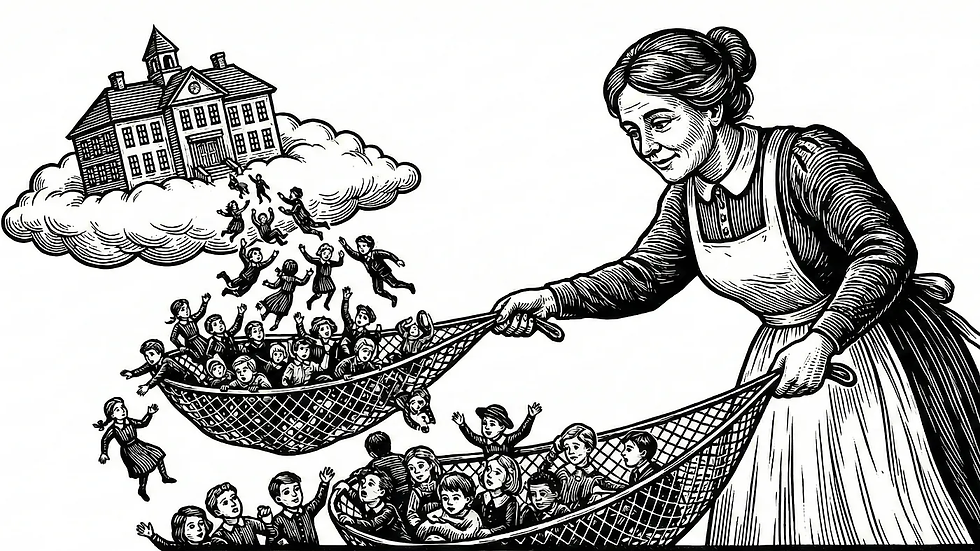
This mirrors the capitalism with safety nets:
Not removing incentives. Not guaranteeing outcomes. But correcting inequalities while preserving motivation. Support systems work best as a complement to capitalism, not a replacement system. It should strengthen the weak without breaking the incentive loop.
The Hidden Risk of Altruism at Scale
(Altruism = selflessly helping others, putting their needs above your own)

Altruism feels moral. Compassion feels humane. Support feels good. But systems don’t respond to intentions (I want everyone to succeed, so I’ll make sure no one fails); they react to feedback loops(If failing is impossible, studying becomes optional & students stop trying).
If the teacher caps the marks of high-performing students, or orders top students to provide support systems for lagging students. Then we are moving back toward Scenario 1.
When help becomes unconditional, and outcomes become guaranteed, the system loses what effort led to success vs. failure. And Responsibility diffuses. This doesn’t make people worse. It weakens the system’s ability to guide behavior. Altruism without structure doesn’t eliminate suffering; it often stabilizes dependency.
Support systems should correct disadvantages, not replace incentive loops. Compassion should strengthen agency, not dissolve it.
Even with support systems, the core engine must remain intact, where input (effort) is driven by a promised motivator (incentive), resulting in a tangible or intangible benefit (reward)
Effort → Incentive → Reward
When this chain breaks, systems decay. Capitalism preserves it. Pure communism removes it. Poorly designed socialism risks weakening it.
Progress requires pressure. Learning requires feedback. Growth requires consequence.
And Why Collectivist Ideologies Feel So Appealing?
Humans are drawn to moral purity. Equality feels fair. Safety feels compassionate. Certainty feels comforting.
Ideologies promising equality of outcome, moral superiority, and collective justice become emotionally attractive because they appeal to moral psychology rather than system logic.
The mind prefers fairness. Reality requires incentives.
Capitalism and Human Progress
Look at the historical record. Capitalist economies produced the internet, smartphones, modern vaccines, aviation, and biotechnology. Centrally planned economies, despite having brilliant scientists, mostly stagnated.
Every major leap forward in science, technology, medicine, infrastructure, and innovation has emerged from systems with incentives, competition, risk, and reward. (Not from systems that guarantee outcomes and equal distribution, but from the rewarded contribution)

Incentives: Smart, capable people have choices about where to spend their time and energy. Incentives (money, recognition, impact) pull talent toward specific fields or problems.
Competition: When multiple people/companies race to solve the same problem, everyone moves faster and works harder because someone else might beat them.
Risk: Breakthroughs require trying things that might fail. If a system punishes failure too harshly or doesn’t allow risk-taking, only safe/proven approaches get attempted, which means no major innovations.
Reward compensates for risk and attracts more talent: Because risk-taking often leads to failure (and failure means losing time/money/effort), the potential rewards must be large enough to make the risk worthwhile. Big rewards justify big risks.
Capitalism is not perfect. It creates inequality. It produces power imbalances. It can be exploited. But it preserves the most important system principle, “The connection between effort and outcome.”
Humans are not rational actors. They are emotional, biased, impulsive, status-driven, tribal, and inconsistent.
Why We Need Rational Systems for Irrational People
Humans are not rational actors. We’re emotional, biased, impulsive, status-driven, tribal, and inconsistent.
That’s precisely why we need rational systems.
Imagine irrational people in irrational systems. It would be catastrophic. (Like printing money to solve poverty, etc)
Rational systems work not because people are logical, but because incentives shape behavioral patterns regardless of individual psychology.
You don’t build functional systems by perfecting humans. You build them by designing structures that guide behavior, even when people are irrational.
The Real‑World Mapping (So the Analogy Is Clear)
To make this explicit:
Classroom → Society / Economy
Teacher → Government / Institutions
Students → People / Citizens / Workers / Entrepreneurs
Marks → Money / Income / Resources / Status
Cheating → Corruption/rent-seeking/cronyism
Favoritism → Oligarchy/state capture
Extra classes/support → Welfare / social safety nets / public services
Feel Free to follow me on LinkedIn! https://www.linkedin.com/in/isanthoshgandhi
Originally published at Twitter/X on January 26, 2025
Comments